Client / Program
Merrill Lynch / Bank of America
Merrill Lynch / Bank of America
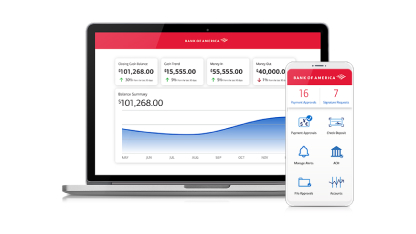
An enterprise design system for internal financial advisor tools, created to reduce fragmented experiences, improve consistency, and support more scalable product delivery across advisor-facing platforms.
Client / Program
Merrill Lynch / Bank of America
Role
Sr. UX/UI Consultant
Product
Internal Product Tools / Design System
Industry
Financial Services / Enterprise
Scale
6-person cross-functional team
Merrill Lynch faced a challenge with internal financial advisor tools that had been developed across different verticals and product teams. This created inconsistent design patterns, redundant components, fragmented experiences, and duplicated design and development effort.
As Sr. UX/UI Consultant, Jorge supported the development of an enterprise design system intended to create a more cohesive framework for advisor-facing tools.
Merrill Lynch, a division of Bank of America, needed to improve the consistency and scalability of internal enterprise tools used by financial advisors. The objective was to create a cohesive enterprise design system that could reduce fragmented user experiences, support reusable components, improve collaboration between design and engineering, and establish governance for future product work.
Merrill Lynch, a division of Bank of America, had a set of internal enterprise financial advisor tools that had evolved in silos across different verticals.
The result was inconsistent design patterns, redundant components, fragmented user experiences, and duplicated effort across teams.
For financial advisors, the lack of a standardized framework created friction when moving across tools and workflows. For the organization, it created maintenance overhead and made it harder to scale product improvements consistently.
The core challenge was not simply visual consistency. It was creating a shared design and delivery foundation that could support advisor productivity, product scalability, and long-term governance.
As Sr. UX/UI Consultant, Jorge helped shape the design system strategy and worked with cross-functional stakeholders across design, product, and engineering.
His responsibilities included contributing to design principles, component patterns, documentation standards, governance guidance, and alignment between design and development teams.
The role required translating fragmented advisor tool experiences into reusable patterns and helping establish a shared framework that could support future product delivery.
The work involved a 6-person cross-functional team. Collaboration was colocated, supporting close coordination between design, product, and engineering stakeholders throughout design, prototyping, testing, documentation, and implementation.
The work followed a research-led, structure-first design process with continuous validation. The approach emphasized research over opinion, structure before surface, and continuous usability validation.
Frame - Align and define
Discover - Research and empathize
Structure - Information architecture
Ideate - Explore concepts
Interact - Optimize flows
Design - Visual and systems
Validate - Test and reduce risk
Launch - Build and QA
Improve - Measure and learn
The research approach included user interviews, usability testing with financial advisors, and a detailed audit of existing tools.
The team cataloged design inconsistencies, redundant components, and workflow fragmentation across internal advisor platforms.
Key insights showed that advisors had to navigate disparate systems and inconsistent interaction patterns, creating unnecessary friction in their daily work.
The information architecture strategy focused on creating a clear organizational structure for the design system.
The team established taxonomy for components, patterns, and documentation so that designers and developers could find, understand, and reuse assets more easily.
A centralized pattern library served as a shared source of truth, helping reduce confusion across teams and improve consistency across product verticals.
The team used iterative prototyping methods to explore key components and advisor workflows.
High-fidelity prototypes were created for critical patterns and reviewed with stakeholders and users.
Testing helped validate design assumptions, identify usability issues, and refine components before broader implementation.
The project went through multiple iterations based on user feedback and stakeholder review.
Initial patterns and workflow designs were refined to improve clarity, usability, and guidance.
Feedback from advisors highlighted areas where contextual help, clearer interaction states, and better pattern documentation could improve the overall experience.
The design system work supported Merrill Lynch's goals around reducing design and development duplication, improving operational consistency, and creating a more scalable foundation for advisor-facing tools.
By establishing shared patterns, documentation, and governance, the initiative helped reduce fragmentation across tools and supported more consistent product delivery across verticals.
Enterprise design systems are not only about visual consistency. They create shared foundations for governance, reuse, collaboration, and scalable delivery across complex product organizations.