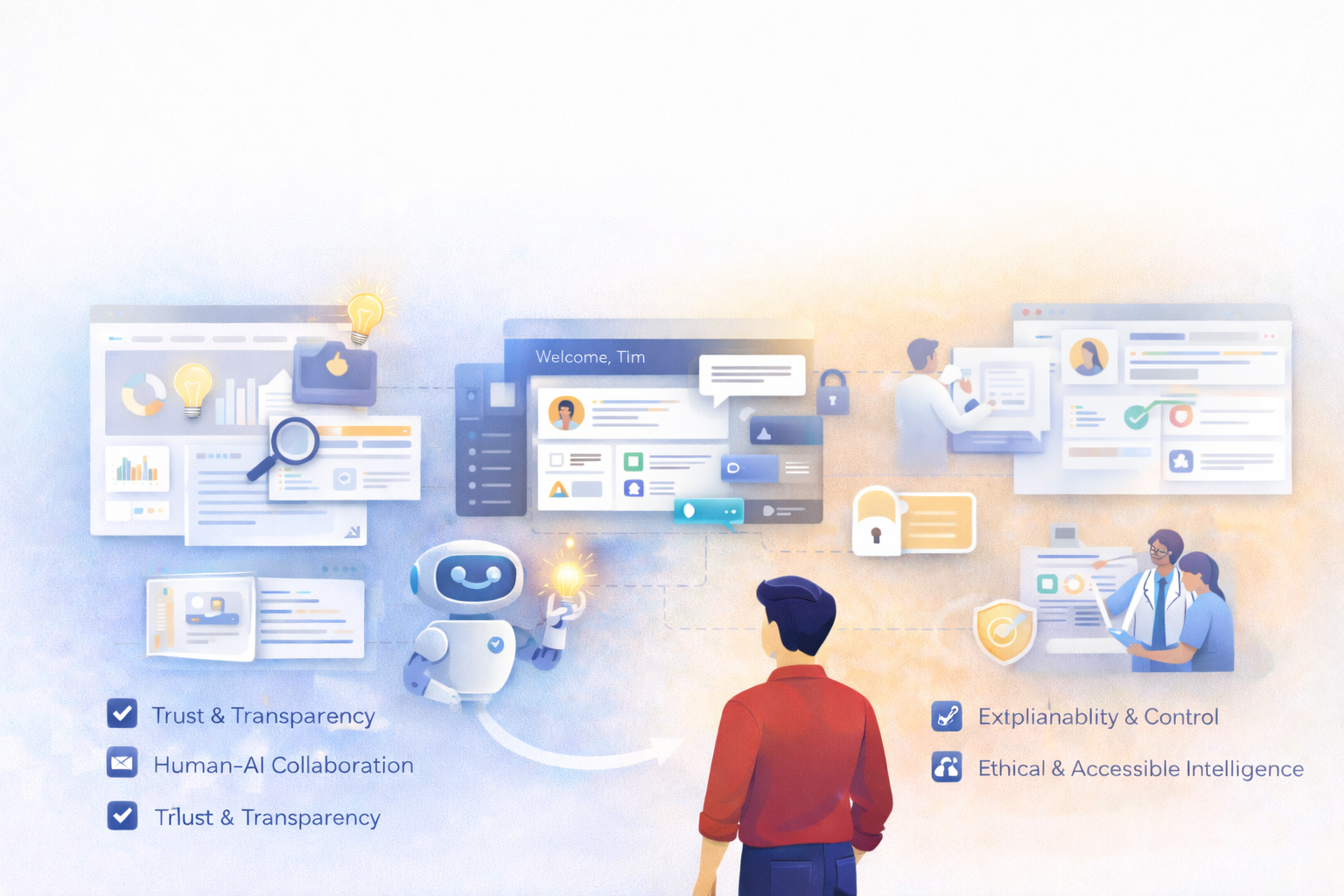
From Pages to Platforms
There was a time when digital design meant designing pages. Fixed layouts. Defined entry points. Predictable navigation. The craft was about hierarchy, typography, and composition.
But the web didn’t stay contained. Pages became dashboards. Dashboards became platforms. Platforms became ecosystems. Design stopped being about arranging content and started being about orchestrating systems.
The question changed from “How should this page look?” to “How does this system behave?”
Designing for Roles, Not Just Users
Platforms introduced complexity at scale. We no longer design for a single user, but for multiple roles—each with different goals, workflows, and incentives.
- Administrators
- Operators
- Buyers and sellers
- Analysts
- Executives
Design becomes less about aesthetics and more about enabling decisions across systems, data, and organizational structures.
Designing at Scale
As products grow, complexity increases. More users. More workflows. More data. More dependencies.
At scale, design is no longer about polish. It is about orchestration.
- Clarifying structure
- Reducing cognitive load
- Enabling confident decision-making
You are no longer designing interactions. You are designing decision environments.
From Interfaces to Systems Thinking
In complex environments, surface-level improvements are not enough. Durable systems require modular design, consistent patterns, and strong mental models.
Design becomes about relationships—between users, data, workflows, and business objectives.
The AI Shift
AI fundamentally changes how systems behave. We are no longer designing deterministic flows—we are designing adaptive systems.
Outputs are no longer fixed. Systems generate, learn, and evolve.
The design question becomes: how should the system behave when it is uncertain?
Designing for Trust
In intelligent systems, trust becomes the primary UX metric.
- Transparency
- Explainability
- Feedback loops
- Human oversight
The goal is not to eliminate uncertainty—but to make it navigable.
From Interfaces to Behavior Design
Designers are no longer just shaping interfaces. They are shaping behavior.
Decisions influence judgment, productivity, risk, and outcomes. Design becomes deeply connected to governance and system ethics.
What This Evolution Means
The evolution from pages to platforms to intelligence represents a structural shift in the discipline.
- From screens → systems
- From outputs → outcomes
- From control → adaptability
Design is no longer a finishing layer. It is a structural layer.